Se afișează postările cu eticheta Google. Afișați toate postările

vineri, 28 iunie 2013

FaceBook, Twitter launch apps for Google Glass

Facebook and Twitter have launched applications for Google glasses as developers rushed to learn more about tailoring software for the Internet-linked eyewear yet to hit the market.

Facebook and Twitter have launched applications for Google glasses as developers rushed to learn more about tailoring software for the Internet-linked eyewear yet to hit the market.


Built by Facebook, this app allows you to upload photos from Google Glass directly to your Facebook timeline," Erick Tseng, head of mobile products at the social network, said in a message posted from the Google developers conference. "You can also add an optional photo description, just by speaking it.
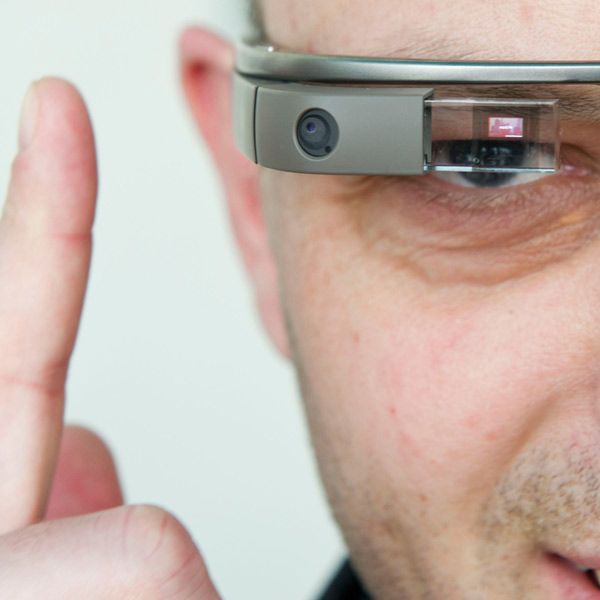
Built by Facebook, this app allows you to upload photos from Google Glass directly to your Facebook timeline," Erick Tseng, head of mobile products at the social network, said in a message posted from the Google developers conference. "You can also add an optional photo description, just by speaking it.


Tseng's Facebook page displayed an image evidently taken in a packed Glass session at the gathering and was tagged as the first public post to the social network using the application built for the eyewear. "Can't wait to start seeing Google Glass photos in my News Feed!" Tseng said.
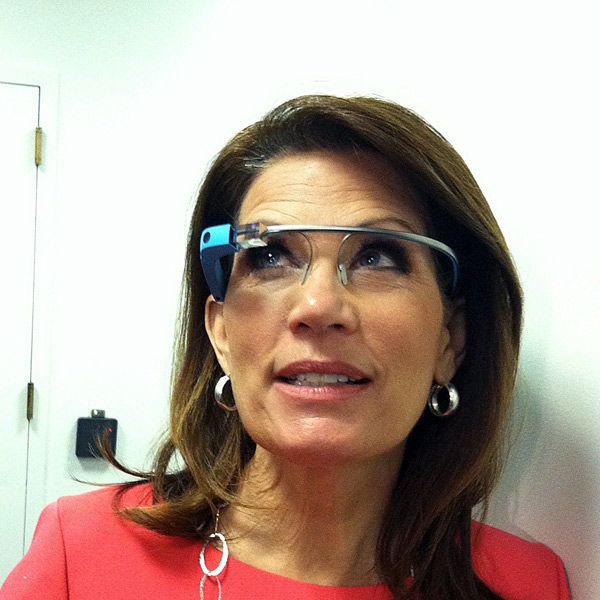
Tseng's Facebook page displayed an image evidently taken in a packed Glass session at the gathering and was tagged as the first public post to the social network using the application built for the eyewear. "Can't wait to start seeing Google Glass photos in my News Feed!" Tseng said.


Globally popular messaging service Twitter also introduced an application for Glass. Twitter for Google Glass let people share pictures or text messages using the glasses, according to engineering manager Shiv Ramamurthi.
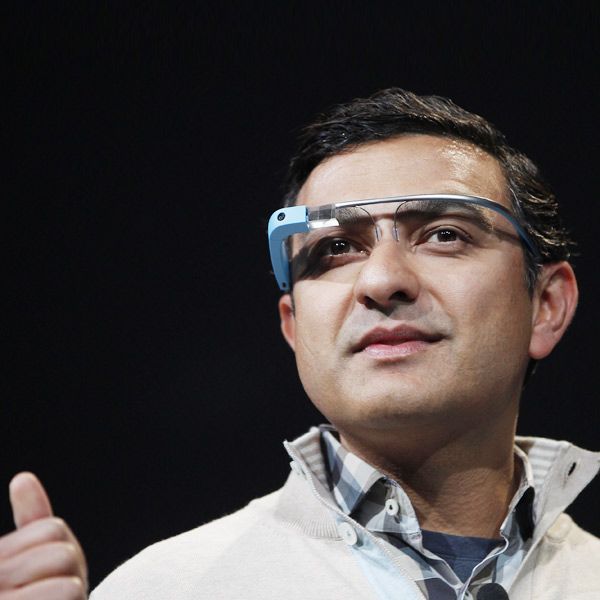
Globally popular messaging service Twitter also introduced an application for Glass. Twitter for Google Glass let people share pictures or text messages using the glasses, according to engineering manager Shiv Ramamurthi.


Ramamurthi demonstrated his point by tweeting an image from one of the array of sessions devoted to providing developers with insights and tools for making software for Glass. He gave the picture the hashtag #throughglass.
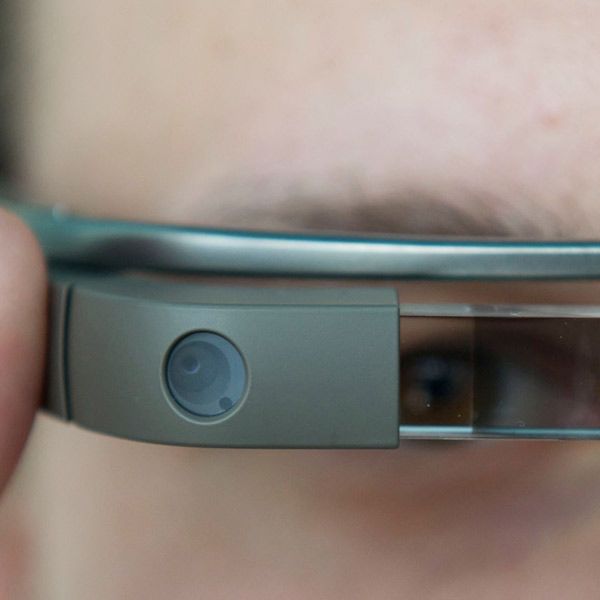
Ramamurthi demonstrated his point by tweeting an image from one of the array of sessions devoted to providing developers with insights and tools for making software for Glass. He gave the picture the hashtag #throughglass.


In addition to sharing photos, you can also keep up with the people you follow on Twitter through notifications," Ramamurthi said. "As always, you can reply to, retweet or favorite these Tweets.
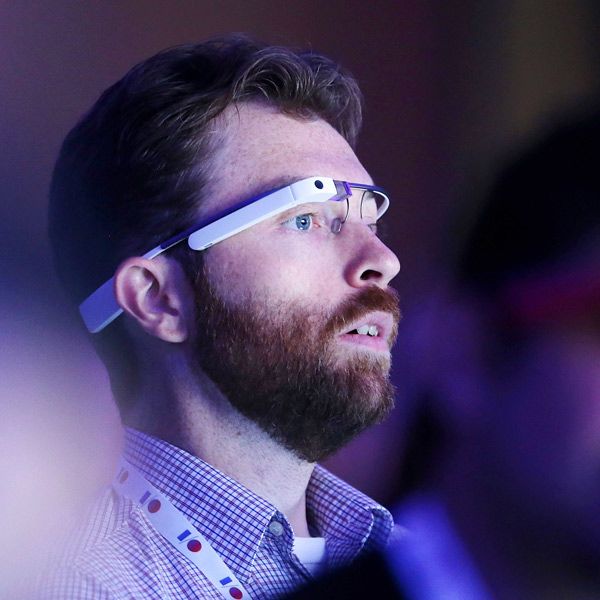
In addition to sharing photos, you can also keep up with the people you follow on Twitter through notifications," Ramamurthi said. "As always, you can reply to, retweet or favorite these Tweets.


Google Glass was a common sight at the California-based Internet giant's annual developers conference.
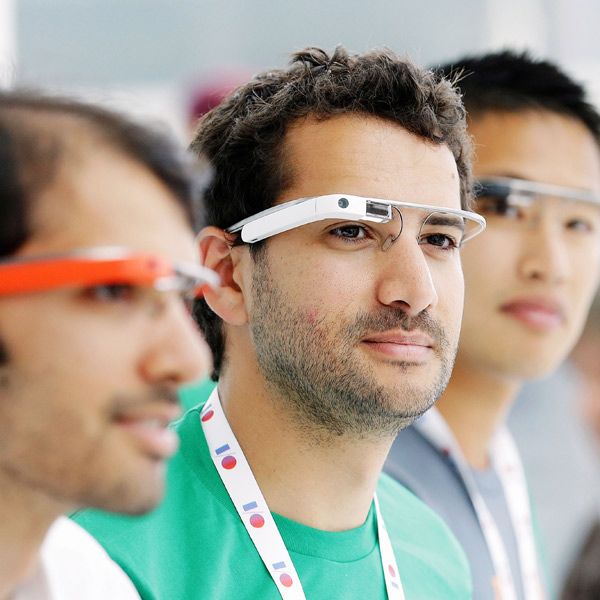
Google Glass was a common sight at the California-based Internet giant's annual developers conference.


Software savants at the gathering shared visions of games, weather reports, news and more delivered to the Internet-linked eyewear.
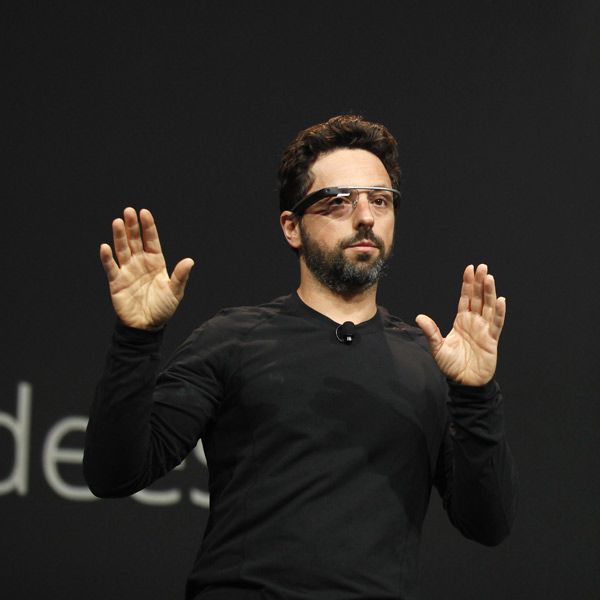
Software savants at the gathering shared visions of games, weather reports, news and more delivered to the Internet-linked eyewear.


Many of the 6,000 developers attending an annual Google I/O event in San Francisco sported Glass in what was unofficially deemed the largest ever gathering of Glass wearers.

Many of the 6,000 developers attending an annual Google I/O event in San Francisco sported Glass in what was unofficially deemed the largest ever gathering of Glass wearers.


Envisioned uses ranged from practical tasks such as shopping or delivering local weather reports to sharing real time video streams of riding cable cars or playing augmented reality games in which the world is the board.

Envisioned uses ranged from practical tasks such as shopping or delivering local weather reports to sharing real time video streams of riding cable cars or playing augmented reality games in which the world is the board.


Glass lets wearers take pictures, record video, send messages, or perform other tasks with touch controls or by speaking "Okay Glass" followed by a command.
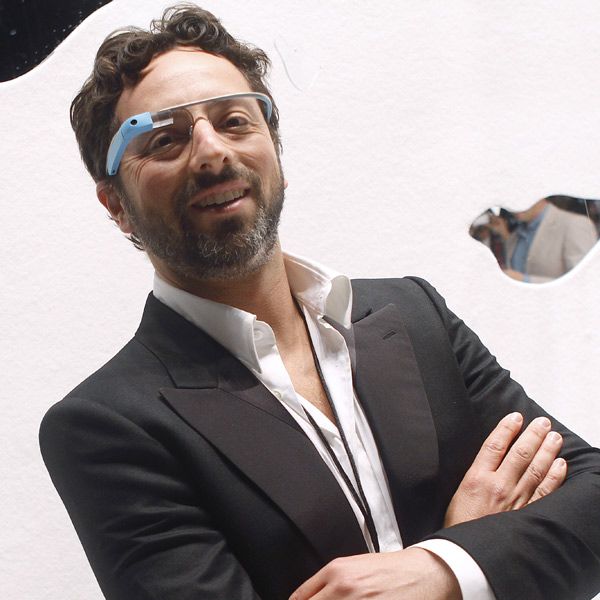
Glass lets wearers take pictures, record video, send messages, or perform other tasks with touch controls or by speaking "Okay Glass" followed by a command.


Glass connects to the Internet using Wi-Fi hot spots or, more typically, by being wirelessly tethered to mobile phones. Pictures or video can be shared through the Google+ social network.

Glass connects to the Internet using Wi-Fi hot spots or, more typically, by being wirelessly tethered to mobile phones. Pictures or video can be shared through the Google+ social network.


Google co-founder and chief Larry Page depicted Glass as part of an ongoing effort to get computers "out of the way" so people can focus on lives enriched by what the Internet has to offer.(Getty Images)

Google co-founder and chief Larry Page depicted Glass as part of an ongoing effort to get computers "out of the way" so people can focus on lives enriched by what the Internet has to offer.(Getty Images)


"We want to make sure we are building experiences that make people really happy," Page said while speaking about Glass.(Getty Images)
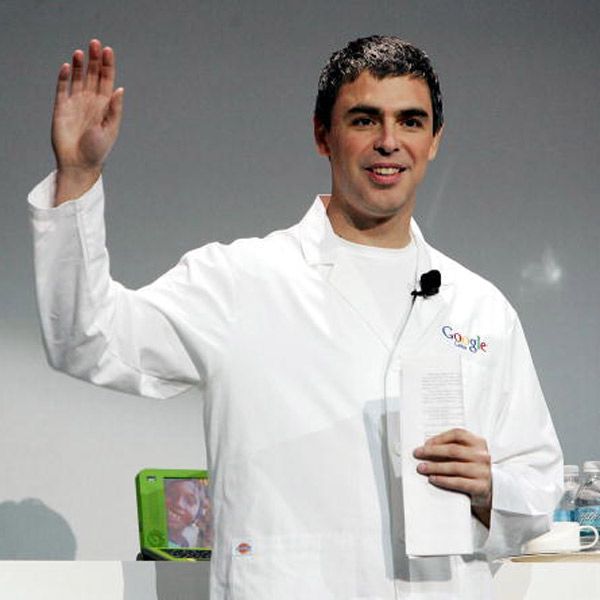
"We want to make sure we are building experiences that make people really happy," Page said while speaking about Glass.(Getty Images)


"We are relying on you to make happy users," he told developers at the conference. "Ultimately, I think a lot of your experiences will move to Glass."(Getty Images)

"We are relying on you to make happy users," he told developers at the conference. "Ultimately, I think a lot of your experiences will move to Glass."(Getty Images)


Google executive chairman Eric Schmidt said recently that it will take "a while" before consumer versions of Glass are available.

Google executive chairman Eric Schmidt said recently that it will take "a while" before consumer versions of Glass are available.

vineri, 3 mai 2013

Google Reveals Specs of Upcoming Glasses on Support Page

Ever since the Glass was announced back in 2012, the exact specifications of Google Glass had been a mystery. Well, not anymore. Google has updated its support page for Glass and added some basic specifications, which gives us a better idea of what the device would be like.

TECH SPECS

Fit

  • Adjustable nosepads and durable frame fits any face.
  • Extra nosepads in two sizes.

Display

High resolution display is the equivalent of a 25 inch high definition screen from eight feet away.

Camera

  • Photos – 5 MP
  • Videos – 720p

Audio

  • Bone Conduction Transducer

Connectivity

  • Wifi – 802.11b/g
  • Bluetooth

Storage

  • 12 GB of usable memory, synced with Google cloud storage. 16 GB Flash total.

Battery

One full day of typical use. Some features, like Hangouts and video recording, are more battery intensive.

Charger

  • Included Micro USB cable and charger.
While there are thousands of Micro USB chargers out there, Glass is designed and tested with the included charger in mind. Use it and preserve long and prosperous Glass use.

Compatibility

  • Any Bluetooth-capable phone.
  • The MyGlass companion app requires Android 4.0.3 (Ice Cream Sandwich) or higher. MyGlass enables GPS and SMS messaging.
Source

duminică, 28 aprilie 2013

Gmail celebrate 9 years

The evolution of GMAIL:

duminică, 24 februarie 2013

Google adds North Korea detailed coverage to its Maps service

Google Maps can now show you detailed maps of North Korea – both road maps and satellite view. This is something I never thought I’d see so soon.

This happens shortly after Eric Schmidt returned from his visit to North Korea.
According to Google: “To build this map, a community of citizen cartographers came together in Google Map Maker to make their contributions such as adding road names and points of interest. This effort has been active in Map Maker for a few years…”
Only few North Koreans will probably enjoy this addition to Google Maps since the internet access is highly restricted in the country (as is the access to computers too). But South Koreans are already welcoming this, especially those whose families were separated since the Korean War.
I’m quite curious what the North Korea officials think of this and if they are okay with the whole world having a window to the country.
P.S. Notice the huge roads with no cars on them. It’s because the people can’t afford them and also because the few people that are allowed to drive are mostly government officials.

sâmbătă, 26 ianuarie 2013

Free Google Wi-Fi in New York

The Mountain View giant has installed Wi-Fi in a neighborhood south of New York. More than 100,000 residents will benefit free of Internet up to 10 Mbps.


In a burst of generosity, Google has offered Wi-Fi to residents of a neighborhood in New York. The network was launched on Tuesday during a press conference organized by the municipality of the city. In particular it covers the Chelsea neighborhood in Manhattan. This is also where we find the offices of Google.

"This area can now boast of being the first in Manhattan to have a Wi-Fi outside totally free", said Michael Bloomberg, the mayor of the city, hoping that New York will one day become "the global technology center."  In total, nearly 100,000 New Yorkers who benefit from Wi-Fi Internet free way for at least two years and at a rate between 5 and 10 Mbps.

A Stunt


In fact, Google is not the only finance the operation. He is the one who will hand over the pocket by paying $ 15,000 to build the infrastructure and $ 45,000 per year for maintenance, the rest will be paid by a local association to promote the development of the district. However, Google said it had no intention at the moment to extend the project to other areas.

This experiment is surely a promotional campaign for the group. Google has actually embark offers Internet access through fiber optics. The group is also currently being tested in Kansas City, where he already has a flow rate of 1 Gbps, which is 100 more than the other operators in the region. In this city, it has also offered free internet access with 5 Mbps rate. New York could be the second city network test Google.

Free Google Wi-Fi in Manhattan

Google is known for its innovative online services and more efficient for its Android-based devices and designed in partnership with leading global manufacturers, but we know less about the Mountain View company for its involvement in the United States in the deployment of Internet across the country.

One finds Google as an ISP in the United States where he gradually deploying a network of high-speed fiber. One of the latest examples for the cover of Kansas City via 1Gbps network. But Google did not stop there, because now offers access to Wi-Fi in the Chelsea neighborhood of New York.


The project in question is the result of a partnership between the public sector (the mayor of New York) and private (Google) for the implementation of this entirely free Wi-Fi as long as you have a Google Account, on the neighborhood of the zone defined below.

Both sides welcomed the progress that allows Chelsea to constitute itself as an attractive high-tech, and residents, students and tourists to enjoy a free quality.

For Google, this operation allows one hand to increase its visibility and popularity on the East Coast of the United States, but also Wi-Fi cover the district of New York is where their offices. This is already the case in the city of Mountain View, which hosts the headquarters of Google, which has a totally free Wi-Fi. Will there be the same in Paris, in the Opera district, near the French offices of Google? Nothing is less certain ...

Do not hesitate, if you make a detour to New York to take advantage of this service in the area rather charming Chelsea and tell us your experience.

After Samsung, Apple attacks Google Apps

Patents between Apple and Samsung, it's a long story. This war is not about to end. The firm at the apple has made ​​a request to the California judge on adding several models and Samsung Apps.


The war between Apple and Samsung is very complex, it is even very difficult to navigate. In this umpteenth chapter, Apple has made ​​a new request to the judge. The California court agreed Friday to add in its complaint several Samsung devices ( Galaxy Tab 2 and Galaxy S3) and the latest version of the Android OS, Jelly Bean. Apple had already attacked this OS, but the complaints were modified versions by Samsung. Today, the Cupertino company directly attacks in Mountain View. Korean has not remained unmoved in the extension of the list because it has decided to add to his complaint, the iPhone 5. Currently, the war between Apple and Google is not reported, but it could very well come in the coming days or weeks.

Another war Apple / Google?

In this trial, the two companies accused of having copied technologies and designs in violation of the intellectual property . In July, Samsung had lost a lawsuit in the U.S., however, the Korean decided to start a war against Apple. The trial is scheduled for 2014 and could be many surprises in the next two years. The addition of Android in the complaint is a surprise. The Google OS met with some success, a survey FIFG indicated that users were satisfied 95%, this rate is quite important. 

Android market represent 75% of sales against 15% for Apple. Finally, Jelly Bean would be used only on 2.7% of terminals 1st November. But in just three years, the Mountain View company has gone from darkness to light with some domination. War could therefore soon take place between the two companies.

The next episode of the war between Apple and Samsung will occur on December 6. This hearing is the result of the first case. Samsung was ordered to pay a billion dollars to Apple, but the Korean did not want to stop there. We must therefore wait until the beginning of December to see the turn of events.

Google TV emulator now on Windows, Mac OS X and Linux

The Google TV struggling to unite, has only a catalog of applications  very thin. Things should change, because the development has been greatly facilitated.

The Google TV is not a new project at Google, since the first products were released in October 2010 with two major manufacturers: Logitech and Sony. Unfortunately face a high price, performance, halftone, the public has not answered this. It must be said that the platform used only for Intel processor family, where Android was exclusively oriented ARM on smartphones and tablets.

At the Google I / O 2011, a reboot was held to launch the second generation of Google TV integrating the Play Store. Now based on Android 3.1 and ARM processors, the interface has been completely redesigned and partners are multiplied: LG, Vizio, Hisense and still Sony. In addition, Japanese is the first to have taken the plunge and propose its box  NSZ-GS7 Europe. Unfortunately the record is far from convincing, the fault system is still too young, consisting of some applications and multimedia support very light. A proof of this failure: the French company Archos prefers to use an interface pad for his TV Connect.

At CES 2013, we got to the third generation of Google TV. Changes are much less numerous, but the companies believe with headlining LG will leave the United States no less than seven televisions. Other partners are added, including Asus, Netgear or TCL. Among the new software, there is a new launcher, an impressive voice recognition  that allows you to search a video, open an application, display a string or even be able to answer queries such as "film taking place in Las Vegas with burglary casinos." TV & Movies The application is now renamed PrimeTime and improves comfort for access to content. Finally the YouTube app has been updated and can play a video from his or her smartphone tablet, as does the Nexus Q (for the few owners of the unit).


Unfortunately despite the third generation of the catalog of applications is still thin and competing operating systems (Samsung Smart TV being the most important) arrive to do better. One of the causes of this failure comes from the tools available to developers. While it is very easy to use emulator for smartphones and tablets, Google TV required to have a computer with Linux KVM.

Good news because the Google TV Add-on API Level 13 comes out and finally offers extensive support for Windows, Mac OS X. Need for KVM, but only Intel hardware acceleration (also available on the Android emulator standard). If you have an AMD processor, you will unfortunately still limited to the old method. This new version includes bug fixes, but also browser based on Chrome.

You can then begin to develop your applications. Some things to consider: a Google TV is not touch screen uses a wide , has no sensors like the accelerometer and digital compass, includes neither a camera nor a GPS or Bluetooth, or a microphone.

But if you want to make an application "universal", that is to say compatible smartphones and tablets, you should place your layouts folder layout-large-NoTouch and resources in drawable-land-tvdpi (for 720p ) or drawable-land-xhdpi (for 1080p).

It remains only to let the developers take ownership of the platform and give the necessary elements for its success.

joi, 13 septembrie 2012

iPhone 5 vs. Samsung Galaxy S III vs. Droid RAZR HD vs. Nokia Lumia 920


The iPhone 5 launches into a more challenging field of competitors than ever, and to give you some context about the iPhone 5 specifications compared with those of its chief competitors, we put the most important characteristics of each into this handy table.
As we look at specs of the iPhone 5 compared with the Samsung Galaxy S III, Nokia Lumia 920 and Motorola Droid RAZR HD, we can see patterns emerging, such as all the iPhone 5′s competitors have a screen that’s at least 720p (1,280×720 pixels), dual-core 1.5GHz processors, an updated operating system (although that’s debatable in the case of Android 4.0.4 Ice Cream Sandwich), an 8-megapixel camera and 4G LTE — all functioning as de facto standards in this highest echelon of smartphone goodness.


Apple
iPhone 5

Samsung Galaxy S III

Droid RAZR HD

Nokia
Lumia 920
Screen Size 4 inches 4.8 inches 4.7 inches 4.5 inches
Resolution 1,136 x 640 1,280 x 720 1,280 x 720 1,280 x 768
Weight 3.9 oz 4.7 oz 5.1 oz 6.5 oz
CPU Dual-core Apple A6 Dual-core 1.5GHz Snapdragon S4 (in the U.S.) Dual-core 1.5GHz Snapdragon S4 Dual-core 1.5 GHz Snapdragon S4
Storage 16GB, 32GB or 64GB, no card slot 16GB, 32GB or 64GB +microSD slot 12GB+microSD slot 32GB, no card slot
Connectors Apple Lightning microUSB microUSB microUSB
Operating System iOS 6 Android 4.0.4 (Ice Cream Sandwich) Android 4.0.4 (Ice Cream Sandwich) Microsoft Windows Phone 8
Battery 225 hours standby, 8 hours talk time (3G) 790 hours standby, 11:40 hours talk time (3G) TBA 300 hours standby, 10 hours talk time (3G)
Camera 8MP, 3264×2448 pixels, autofocus, LED flash 8MP, 3264×2448 pixels, autofocus, LED flash 8MP, 3264×2448 pixels, autofocus, LED flash 8MP, 3264×2448 pixels, optical image stabilization, autofocus, dual-LED flash
Networking Wi-Fi, 2G, 3G, 4G LTE Wi-Fi, 2G, 3G, 4G LTE Wi-Fi, 2G, 3G, 4G LTE Wi-Fi, 2G, 3G, 4G LTE
Price $199 for 16GB, $299 for 32GB, $399 for 64GB; avail. Sept. 21 $99.99 + $35 carrier fee $199 (estimated, launch end of 2012) TBA, launch Q4 2012

via http://mashable.com/2012/09/12/iphone-5-compared/

luni, 30 iulie 2012

MARISSA MAYER: FROM GOOGLE 'GEEK' TO YAHOO CEO

Google's first female engineer, Marissa Mayer, has made a career out of bucking expectations -- and she did so once again on Monday by announcing she will leave Google to be the new CEO of Yahoo, the struggling company that once was Google's main competitor.


The tech world reacted with shock to the news. But it's perhaps time everyone got used to the idea that Mayer, who was Google's 20th employee and who is credited with the success of many of its most famous products, isn't the kind of person who does only what people expect her to do.


At Google, Mayer was responsible for overseeing the launch of some of the company's most iconic products, including Gmail, Google Maps and iGoogle.


But it was her keen design aesthetic that in part led to her success at Google, which she helped grow into one of the biggest tech and Internet companies on the planet. Mayer's most enduring legacy at Google may prove to be the company's search engine homepage, with its minimalist feel, ample white space and bright blue, red, yellow and green colors. She is credited with pushing for that clean, approachable look -- which seems to be a reflection of her style outside the office, too.

Forbes said the Yahoo job puts Mayer "in the running for the title of the most powerful woman in tech."


And the blog ReadWriteWeb said she is "just what Yahoo needs."


"This is a great move for Yahoo, which has stewed in mediocrity for years," wrote ReadWriteWeb's Dan Frommer. "Mayer, a big shot in Silicon Valley and a perfectionist product-type executive, could legitimately make Yahoo respectable again. At the very least, she will command attention."

New Yahoo CEO Marissa Mayer was the first female engineer hired at Google in 1999, where she became one of the company's top executives and most visible public faces. Only 37, Mayer has often been named one of the most powerful women in business. Mayer spoke here at at TechCrunch Disrupt NYC in May 2012.

Mayer speaks onstage at the FORTUNE Most Powerful Women Dinner in New York City in May 2011. She was Google's vice president of consumer products at the time.

Mayer speaks during the announcement of the launch of Google Instant, a faster version of Google search, in September 2010 in San Francisco, California.

News anchor Matt Lauer and Mayer attend the The 2009 Women of the Year hosted by Glamour Magazine at Carnegie Hall in New York City in November 2009.

Mayer and musician and activist Wyclef Jean attend TIME's 2010 Person of the Year Panel in November 2010.

Mayer at the launch of Google Maps' Transit feature at Grand Central Station in New York City in September 2008.

duminică, 29 aprilie 2012

Google Drive is now official, offers 5GB of free cloud storage

After being rumored for the better part of the last year, Google officially just announced its own cloud storage solution – Drive.


Google Drive is now official, offers 5GB of free cloud storage

Google Drive gives you 5GB of storage the second you sign in to use the service. No questions asked. The interface is based on Google Docs and you can collaborate with other people on documents, spreadsheets and presentations. The sharing and collaboration system is enhanced by comments, which you get notified for if they are new.

If you’ve been using Dropbox, you’ll feel very at home with Google Drive. That’s because Google has borrowed an idea or two from the undisputed cloud storage leader, hoping to get to sit in its cozy throne some day. Drive comes with a desktop client for Windows and Mac OS X and in the form of a mobile app for Android. It seems though, iPhone and iPad users will have to wait a bit to get their Drive apps.

Once in Drive, you get a list of all your documents from Google Docs and your files from the designated folder on your computer. Those files get listed on the service’s mobile app as well.

Naturally, Google has used its immense search know-how in Drive. You can search your files by keyword, file type, owner and more. It can even recognize text in scanned documents using OCR (Optical Character Recognition) technology. It goes one step further by using image recognition technology on your photos. So if, for example, you’ve made a photo of the Colosseum in Rome and later search for “Colosseum”, your Drive photos of that place will appear as results.

If you find 5GB too limiting, Google gives you plenty of upgrade options for a monthly fee. You can choose between 25GB of cloud storage for $2.49/month, 100GB for $4.99/month or 1TB for $49.99 month. An added bonus is that if you choose an upgrade, your Gmail account storage also increases by 25GB of space. Check out Google’s introductory video to their brand new service.

Google has integrated Drive very tightly with its other services like Google+ and Gmail. The company says you’ll eventually be able to share stuff from your Drive in Google+ or attach it directly in Gmail.

Now it’ll be interesting to see how the competition from Dropbox, SugarSync, SkyDrive, Box.net and others respond to the Google challenge.
Source

miercuri, 18 aprilie 2012

Gmail: disruption for millions of users


While the rumor swells around the launch of Google Drive (next week?), A cloud service from Google has been some disturbance Tuesday.

For nearly an hour around 19h, hosted Gmail users with a 500 error page when trying to connect. A 500 ​​error is a sign of an internal server error.

The outage was felt worldwide and affected individuals and professionals who hold a Google Account.

Particularly with social networks, this problem does not pass unnoticed. Gmail has nearly 350 million users. The first minutes of the incident, Google has raised an impact for less than 2% of them prior to reassess its estimate to less than 10%. A small percentage but still some 35 million users.

Google has apologized for the inconvenience and ensure the reliability of its system remains a top priority. In 2010, Gmail's uptime was 99.984% and 99.99% in 2011. What perspective.

the percentage of users affected was estimated at less than 2% and less than 10%, not the other way as we noted earlier due to incorrect reading of the dashboard of the state of Google apps.

luni, 16 aprilie 2012

List of Google's Jokes for April Fools' Day 2012

To celebrate April Fool's Day, this year Google released multiple sophisticated jokes at the same time. Here is a list of them.

The YouTube Collection: The Magic of YouTube in Your Hands - all the YouTube videos stored in DVDs delivered weekly to your home:

Chrome Multitask - browse with two mouses at the same time:
 
Gmail Tap - an application to type through Morse code:
 
Google Fiber Bar – Food by Google:
 
Google Maps 8-bit for NES:
 
And the most promoted one, announced in Google's search page, a partnership with NASCAR in which Google was going to compete with its own self-driving race car:
The partnership between Google and NASCAR was true, but it was to create the joke.

vineri, 13 aprilie 2012

Google Plus undergoes huge redesign

Google wants to make you use its own social network Google Plus and it’s now bringing a completely overhauled user interface, with panels you can drag and drop, and customize to your liking, to make you like it.
And this redesign gives some good reasons to look into Google+: it’s easier to share with your circles and the Hangouts video calling platform has been improved.
The biggest change you’d notice from the first sight is the “dynamic ribbon” on the left. Apps you don’t access much are hidden under the new“More” section.
Galleries now support bigger photos and there’s more space for videos too, contributing to a better viewing experience.
Conversations are presented in cards and there’s a new activity drawer for talking to your circles. For Hangouts, you have a new page with recently updated chats, and public hangouts that you can join. Check out the new features in the videos below and let us know what you think in the comments.
Just keep on hitting the refresh button, the change should appear automatically soon.
source: Google

marți, 13 martie 2012

How to work from home using Google Adwords

First of all you need a substantial investment. The more the better. Anything under $500 probably isn't worth it. What you'll be doing is writing those ads that you see when you do a search on a google search engine. These are the ads that are on the right side all the time that say things that make you really want to click on them.

To do this you'll need to create a google adwords account. The google adwords account is what you use to write these ads. Second you need to create a clickbank account. The click bank account is where you find people who need you to write the ads for their websites. There are many categories so you can find some thing that appeals to you. There's home and garden, fitness and health, sports, clothing, just about anything. When you pick the category you like, they'll give you a list of websites that need advertising.

You're job is to view the websites provided and pick one. Read everything on the website and make sure you're familiar with it. Now go to your google adwords account and start writing your ad. They'll have a simple form for you to fill out. It's short and simple, just like the ones you see all the time.


The difficult part is your investment. You must choose how much you'll pay per click. The higher you'll pay, the higher you'll be up on the search engine. Bad news is, it can use a lot of money really fast! Make sure you have the money to spare. The good news is once you start getting hits (meaning people visiting your ads) it will become a lot easier to make the money back. When people buy something from the website your ad is for, you'll get paid. If this happened enough, with enough ads, you really can make thousands a day. But don't expect this to be immediate. You'll need time to learn how to spend your money wisely and learn how to write persuasive ads.

How to set up a Google Adwords campaign

Start with Google AdWords.

Focus on your unique value proposition. Decide what you are selling and what makes you stand out from your competitors.
Focus on the most relevant keywords. These terms will convert better than words or phrases that are not as appropriate for your offer.
Set up your site:

1.Well-designed landing pages;
2.A free, valuable email newsletter to capture the addresses of potential customers so you don't have to pay to reach them again.

Build a list of the keyword "themes," phrases, and single words you plan to target. Build this "map" outside of the constraints of the PPC interface. Brainstorm keyword phrases using online tools such as Google's keyword selector tool and wordtracker.

When creating a new Google AdWords campaign, consider bidding higher than you normally would for some important terms. This is an approach unique to Google because it rewards a higher click-through rate (CTR). In a simpler world, CTR would depend solely on the quality of the ad copy. However, your CTR will be higher if your ads appear higher in the search results.

Set up split-testing to optimize your PPC ads. Optimize for click-through rate, which will help you achieve higher placement at lower cost, especially for Google AdWords.

Split-test from top to bottom
1. Headline
2. Description Line 1
3. Description Line 2
4. Display URL

Split-test your landing pages.

Consider creating customized landing pages for specific keywords. Certain types of pages will convert better for some terms than for others.

If a desired keyword is too expensive, try to break it down and go after phrases that are more specific. Identify words and phrases that may not receive as much traffic but can be purchased at a lower bid.

Certain keywords will yield a higher ROI than others. To optimize your PPC campaign, analyze the return at the keyword level.

duminică, 11 martie 2012

How to use http proxy with Chrome

Configuring your connection over proxy in Google Chrome is easy, because Chrome is a pretty simple and quick browser for serfing in Internet.

Run Chrome

Go to Menu → Options


Go to Under The Hood tab and click on Change proxy settings... at the Network section


Proxy settings depends on your Operation System. Instructions for Windows:

Choose the provider or see below for LAN settings, and click Settings


Click Advanced


Congirue your http proxy


If you have only LAN, click LAN sett


Click Advanced


Congirue your http proxy


Enjoy using socks with Google Chrome. Also there are many addons for security and anonymity available.

joi, 8 martie 2012

What the Rise of Google+ Says About Facebook

When Google debuted its social network, this time for real, this time for really real, about six weeks ago, it was big news. Once Google+ arrived, many wondered whether or not a true Facebook rival was finally here. People focused on features, apps, APIs, and Google's potential to scale to measure whether this thing would ever be a real Facebook rival, or another dud, like Google Buzz.

While all those things are all important, there's another factor at work in the rise of Google+, which, by most measures, has been incredible. And that's Facebook. More specifically, the things about Facebook that annoy and frustrate its users. When PCMag put the question to readers, "Will you ditch Facebook for Google+," a whopping 50 percent said they would. Even if most of those who answered yes don't actually end up quitting Facebook, that statistic illustrates a general frustration with the service that's probably familiar to anyone who's on it.

Facebook has been annoying its users probably since its inception. Now, every piece of software has its problems. Some users of iPhoto might be annoyed that it doesn't have built-in integration with Snapfish. Twitter users may not like that a direct message looks almost identical to an @reply (Anthony Weiner certainly doesn't). That's normal. Facebook's issues go deeper, though. Facebook's integration into our lives is so personal, so far-reaching, that when it does something users don't like, irritation can quickly become outrage.

There have been numerous cases of Facebook making some kind of of change to its features, users responding with an uproar, and then Facebook proceeds to make the change anyway. A good example is friend lists, which were recently replaced with Groups. Facebook gave its users lists, noted that (after a while) only 5 percent of users actually used them, and then took them away.

"I know that they say only 5 percent of users really cared about that feature, but they cared about that feature a lot," says Paul Allen, founder of Ancestry.com, Facebook app developer, and an self-described unofficial Google+ statistician. "In the end, everyone had to comply and go along with all the Facebook changes, some of them pretty radical, because they had no choice."

Unitl now, of course. There have been other social networks since Facebook came on the scene, sure, but Google+ is the only one that has the features, the scale, and—possibly most important—the buzz to be a real Facebook competitor. Until now, quitting Facebook was a difficult prospect. Not necessarily physically difficult (though Facebook does bury how to leave the service on its site), but socially difficult. I personally know at least a half-dozen people who left the network at one time or another only to inevitably return. The reason? Some variation of "All my friends are on it, and I don't want to miss out."

In other words, there was really nowhere to go that offered the same experience, so they returned. But now that there's another place for people to get social online, things could be different the next time someone walks away. Google+ isn't quite the Facebook alternative Google wishes it was, however, since the new service doesn't actually have all your friends on it—yet. While the growth has been extremely rapid, it's still 25 million to Facebook's 750 million.

"Google has a big chicken and egg problem," says social media analyst Lou Kerner. "Nobody's going to use it until people are on it. But that's a problem that all social networks have. But to the degree that anyone can solve it, it's Google."

Even though Google+'s member base is a drop in Facebook's bucket, it's actually a pretty notable drop. Google was selective about whom it let into its private playground when it debuted its social network, making sure the initial users were, in a word, smart. What Kerner sees as a weakness of Google+—that it's been limited more or less to the digital "cognoscenti"—Allen sees as a strength. Google+ is already the cool new thing, and a dynamic population of first-generation users (see the slideshow above) multiplies that perception.

"The geek crowd has fallen in love with Google+," says Allen. "Those first 10 or 20 million people who first jumped into Google+, it's like the cream of the crop in technical and professional circles. I have never seen this kind of online discourse and communication."

In the end, the cool factor could be the one that ultimately matters the most. A couple of months ago, when it looked like Facebook's popularity in the U.S. was starting to wane, I entertained the theory (one of many) that Facebook's time might have come. I dismissed it right away—rightly, since user engagement on the site is still rising—but all endings have a beginning. Facebook, for all its impressive features and vast statistics, not to mention a looming IPO said to be potentially worth $100 billion, just isn't cool anymore. Even Allen says the people he talks to about Facebook say "It feels so much like MySpace."

Cool, almost by definition, isn't quantifiable. But there's virtually no question that Google+ currently has loads of it, and Facebook is running dry. Mark Zuckerberg probably isn't losing any sleep over Google+ just yet, and maybe he's shouldn't given Facebook's collosal size and influence. But he should definitely think twice before pulling the trigger on the next Facebook feature with questionable privacy implications. As soon as Google+ opens its doors fully (it's still invitation-only and limited to users 18 or older), every single Facebook user will have the chance to try something new. And they may decide they like it better.

duminică, 19 februarie 2012

Google, Bing, and Yahoo partner for web tag standards

When the top three Internet search providers work together on a project, the web pays attention. On Thursday, Google, Bing, and Yahoo introduced schema.org, a resource for website owners and developers that want to add markup to their pages.

Search engines rely on schemas, or HTML tags, to improve results and make them more accurate. When webmasters set out to optimize their sites for SEO, they can use these markups to help push their sites to the top of results.

A lengthy note on schema.org gives a little more background and explains why finding common ground with website markup is so important:

Many sites are generated from structured data, which is often stored in databases. When this data is formatted into HTML, it becomes very difficult to recover the original structured data. Many applications, especially search engines, can benefit greatly from direct access to this structured data. On-page markup enables search engines to understand the information on web pages and provide richer search results in order to make it easier for users to find relevant information on the web. Markup can also enable new tools and applications that make use of the structure.

This isn’t the first time the biggest players in search have collaborated on a project of this nature. In 2006, Google, Yahoo, and Microsoft came together to create sitemaps.org, which helped standardize Sitemap protocol.

joi, 1 decembrie 2011

Romanian Google Team love Romania


Romanian Google team tell us why she love Romania!